what did you use to cut ford ranger i beam?
Article By:
-
Jim Oaks
-
4x4Junkie
Introduction:
The term 'Cutting and Turn' has been around well before information technology was ever used on the Ford Ranger, Bronco II or Explorer. Owners of these vehicles may think the term refers to "cutting" the TTB beams and "turning" the knuckle (or pin) to gain lift without using driblet brackets for the axle, however the term really originated from a method used to right the caster angle on a solid beam suspension where the differential pinion has been rotated upwardly to correct the driveshaft angle after a lift. It involved rotating the inner knuckle (inner yoke or steering yoke) by cutting the weld out, turning the knuckle on the axle tube to right the caster, and and so re-welding information technology.
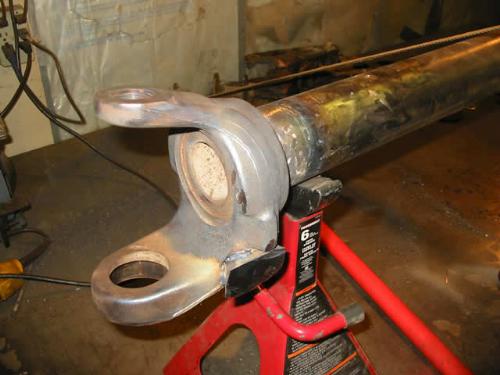
(Cut and turn on a solid front end axle)
Alignment:
To better understand why a 'Cut and Turn' is done, yous have to understand what 'caster' and 'camber' is.
| | |
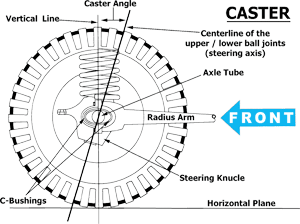
Caster:
Caster Angle is the amount of tilt through the centerline of the ball joints (or king pin) in your front axle. As seen above it is measured looking at the side of the vehicle with a (+) positive value being a tilt to the rear and a (-) negative value beingness a tilt to the front end. Pulley angle is what provides the return-to-centre part of your steering. In most situations on a lifted/modified vehicle a caster angle of +4 to +6 degrees is platonic. Manufactory specs on Dana 44�s have been anywhere from 0 to +7.5 degrees.
Y'all reset the caster at the knuckles when you do the cut and plow on a solid axle.
Slant:
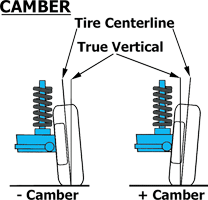
Slant is the inward or outward tilt of the front end tires as viewed from the forepart. In tilt is (-) negative, outward tilt is (+) positive. Proper slant distributes the load evenly across the tire's tread. Improper slant makes the tire wearable on one edge, and can cause the vehicle to pull to the side.
With a solid axle like a Dana 44 the camber angle is fairly stock-still. On a TTB axle, the camber can be greatly affected when lifting the pause. When doing a cutting and turn on a Dana 35 TTB, camber is what you're generally trying to consequence.
Cutting And Turn For A TTB Front Pause:
A Note From Staff Fellow member 4x4Junkie:
A Cut & Turn is primarily a modification for 'become-fast' (desert/prerunner) rigs, it greatly improves clearance under the beam for when you lot're jumping/landing/blasting over whoops and thru dips.
In my travels on the forum, I've seen a number of trail and rock crawler guys who also get hooked on the idea of a C&T without understanding the liability it's increased jacking effects accept on the suspension (from the higher-mounted pivot points) and what it does to the truck'south handling when it unloads on a steep loma or other off-camber irksome-speed situation. Trail crawlers are about always ameliorate off with a adept drib bracket suspension (leaving the beam geometry stock).
The Outcome It Has On Your Pause:
This brings u.s.a. to the Dana 35 TTB suspension used on the front of the older Ford Ranger and Explorers.
Camber and Caster on a TTB are usually adapted using an outset bushing around the upper ball articulation stud (a unmarried bushing adjusts both). However they have a fairly express range of adjustment, which limits the corporeality you can elevator the pause to approximately two inches over the original factory height.
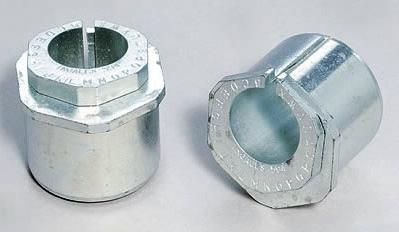
(Dana 35 caster/slant alignment bushings)
If you put a wrench on the bushing and plough it, you'll be able to come across your steering knuckle tilt forward and back, besides as tilt in and out to the side as the bushing rotates.
Using the (ii) diagrams below, you can run into how lifting a Dana 35 TTB profoundly affects your caster and camber. Information technology is the camber that will exist most visually evident.
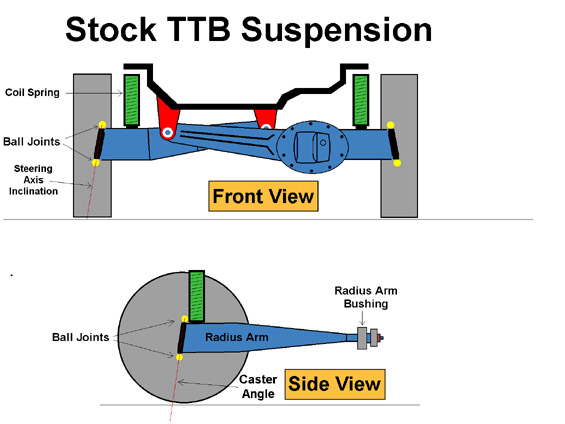
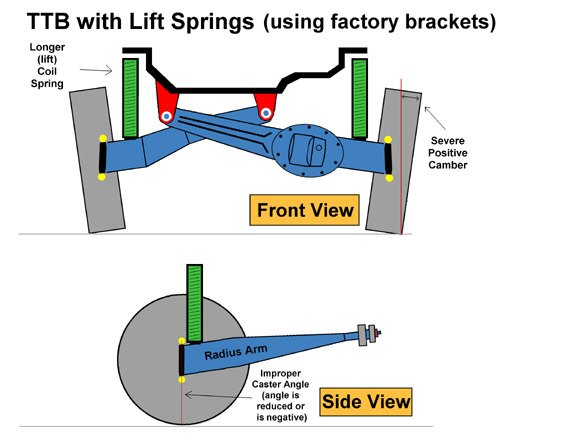
This amount of change in caster and camber is well beyond what is correctable using the alignment bushings shown in a higher place, and so aftermarket TTB suspension kits normally include driblet-downwards brackets for the axle beams and the radius artillery. The brackets for the axle beams help to restore the camber, and brackets for the radius arms assist with the pulley. The alignment bushings are then used to fine-melody the final alignment.
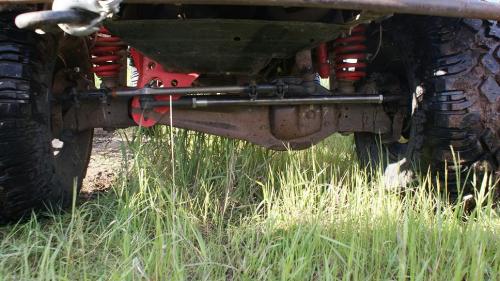
(Note the cerise Skyjacker driblet bracket and how the beam maintains a horizontal line)
How 'Cutting And Plow' Fits In To The Dana 35 TTB Suspension
Ok, nosotros've seen how lifting a Dana 35 TTB affects intermission angles. So how does a 'cut and turn' work on this style of setup?
In this state of affairs, instead of using a drib-downward subclass, the axle beam itself is modified to correct the camber, and (typically) a custom radius arm is used to correct the caster bending, removing the demand for a radius arm driblet subclass.
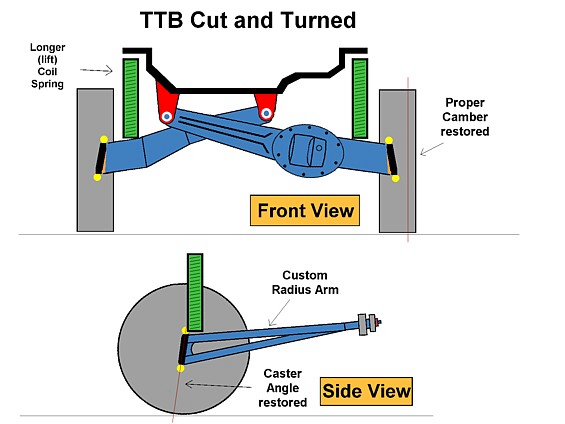
What Is Incorrect With Using Drop Brackets:
1 reason Cut and Turns were done in the by was because early on drop bracket designs tended to be weak; their longer length created boosted leverage on the subclass and vehicle frame which led to problems with angle and cracking with rough use. While meliorate suspension kits such as Skyjacker and James Duff accept successfully tackled these issues using larger and wider brackets that spread the load over a larger footprint, another reason to still do a Cut and Turn is the improved clearance under the beam & differential information technology offers; the brackets and beams don't protrude down every bit far when the suspension fully compresses during jumps or while diggings through dips at high speed, maybe striking a rock or other object imbedded in the route and damaging them.
Methods of Cutting and Turning A Dana 35:
There have been diverse methods that people have used to cut and turn a Dana 35. They include:
-
Cut and relocating the lower ball joint.
-
Cut before the steering knuckle
-
Cutting the pivot end of the beam
Cutting and Relocating The Lower Ball Joint:
The most pop method by far is relocating the lower balljoint outward on the beam, and is the method currently in use at most desert racing shops. When using the stock axle pivot brackets and adding taller coils, the beams angle downward and the tire moves with it at the same angle (see diagrams above). To align the wheel properly, they relocate the lower ball articulation outward to correct camber and make the bicycle sit down straight upward and downward.
How much you move the ball joint outward depends on how much elevator y'all take. Call back that the beams are different lengths, so the altitude you move the lower ball articulation is likely to be different on each side.
There is no prepare degree or measurement to follow. I suggested method found for measuring was to mount the beams with the new coils, and measure the coil height. then pull everything apart, cutting the lower ball joint seat out, and mount the beams. Block the beam so the altitude between the axle and the upper coil bucket is the top you just measured with the coil. With 0-degree alignment bushings, move the ball articulation seat out until you're at 90 degrees to the floor. This will give you your new lower brawl joint seat location. Now y'all simply demand to weld it upwardly. Starting with the 0-degree bushing will requite y'all room to fine tune the alignment after it's all together.
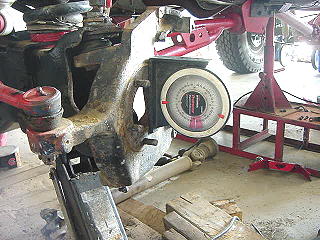
(Non the best photo, but gives yous an idea of checking that the knuckle is 90-degrees. Knuckle should be turned straight frontward)
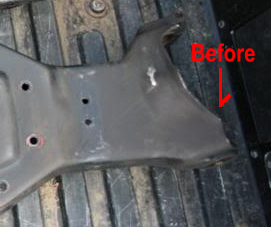
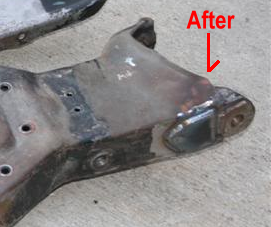
In these photos you can come across where the lower ball joint has been pushed out, re-welded, and reinforced with a metal plate.
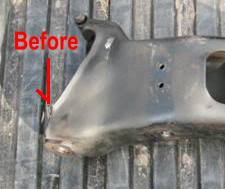
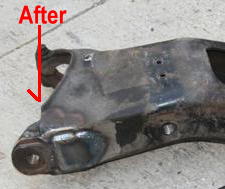
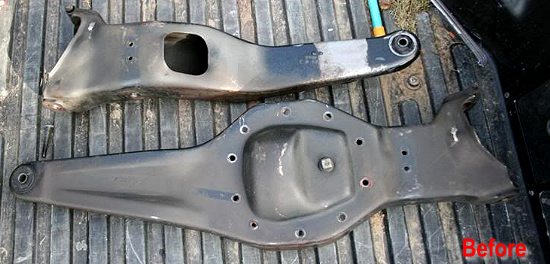
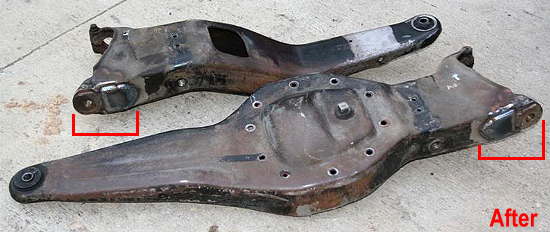
(Dana 44 TTB lower brawl joint, but same thought)
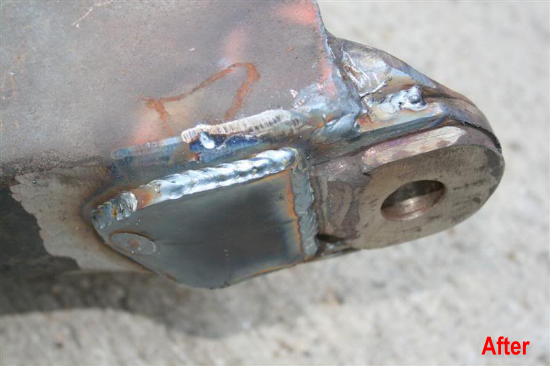
Here'south the lower ball joint seat moved outward, welded, and reinforced.
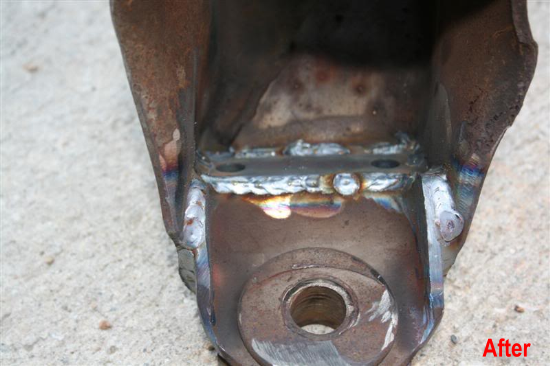
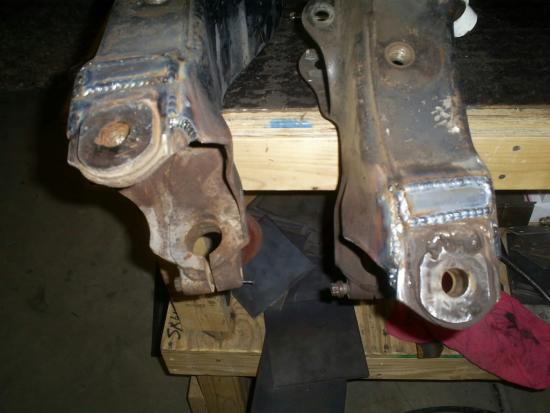
(Note - you're looking at the bottom side of the driver and passenger beams)
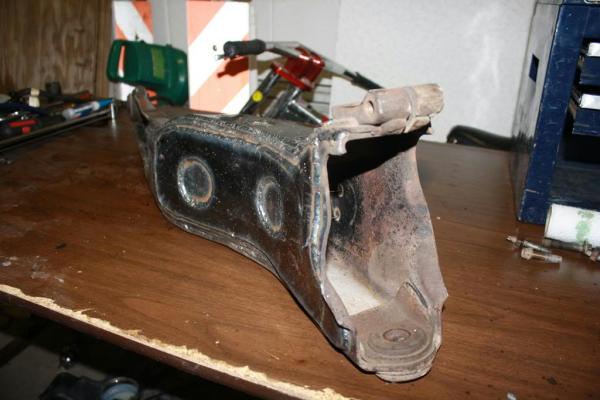
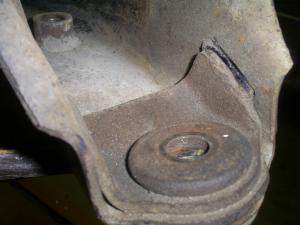
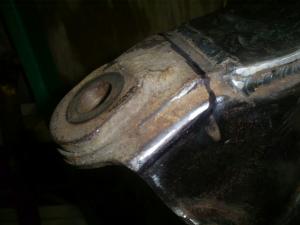
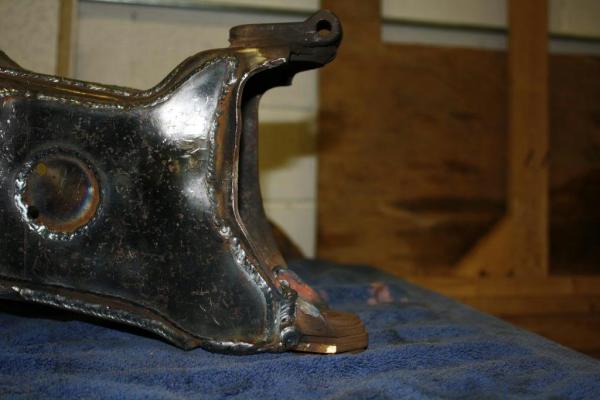
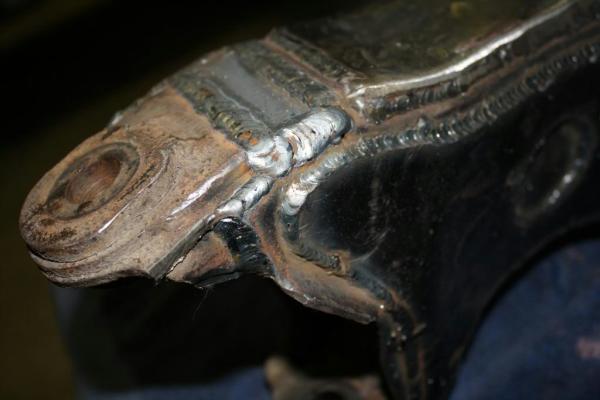
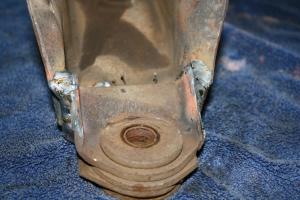
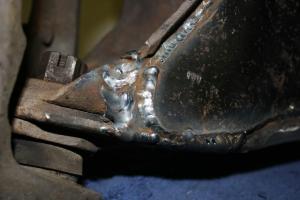
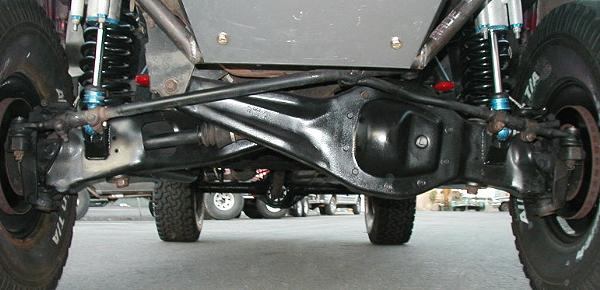
Using this method will not crusade any significant reduction in your axle/track width.
Cut Earlier The Steering Knuckle:
Some people accept washed a cut and turn on the beam simply before the knuckle. It shares the same thought as the ball joint method above past pushing the lower ball articulation out, though it is non as straightforward equally information technology looks (come across note at the stop of this department about misalignment of the axle shaft).
The description will sound similar to what is above:
When using the stock axle beam pivot brackets and adding taller coils, the beam angles down and the tire moves with it at the same angle (see diagrams that are up higher up). To align the bike properly, the axle beam is cut from the bottom just earlier the steering knuckle. This allows the knuckle to be tilted outward to correct slant and brand the wheel straight up and downwardly.
How much y'all motion the knuckle outward depends on how much lift yous have. Remember that the beams are dissimilar lengths, so the amount you move the knuckle will likely be dissimilar on each side.
There is no prepare degree or measurement to follow. You lot should be able to utilize the same method equally described above. Mount the beams with the new coils and measure the coil meridian. So pull everything autonomously, cut the beam from the bottom upward merely before the knuckle, and re-mount the beams. Cake the axle and then the altitude between the beam and the upper coil bucket is the summit you merely measured with the ringlet. With 0-degree alignment bushings, tilt the knuckle out until your at 90-degrees to the floor. This volition give you your new knuckle location. Starting with the 0-degree bushing will requite you room to fine tune the alignment after it's all together. Tack a pocket-size gusset to the bottom of the beam to concur the knuckle in place and then remove the beam for welding.
Of import: You want to exist conscientious filling the gap created when you cut and moved the knuckle. Excessive welding can create a keen bargain of rut and cause the metallic to distort (bend). If you lot're a adept welder y'all'll already know this. Have your time welding the beam back up to forestall this from happening.
(Not the best photo, but gives you an thought of checking that the knuckle is 90-degrees. Knuckle should be turned straight forrad.)
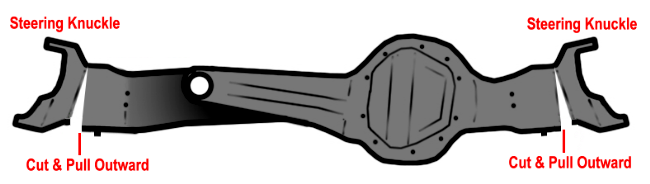
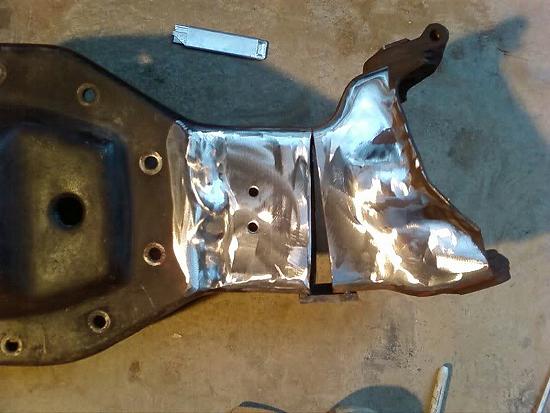
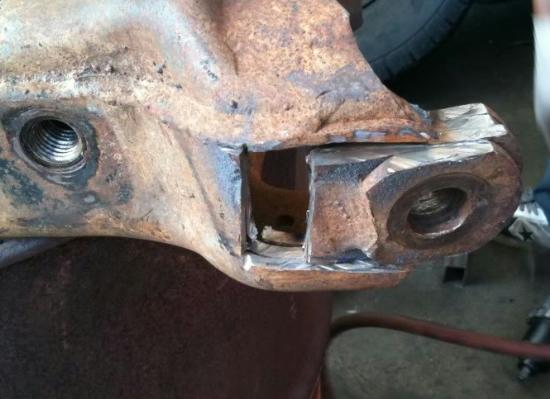
Here the axle is cut and the bottom of the knuckle is pushed outward to correct the camber. Y'all tin see where a piece was welded on to agree it in its new position.
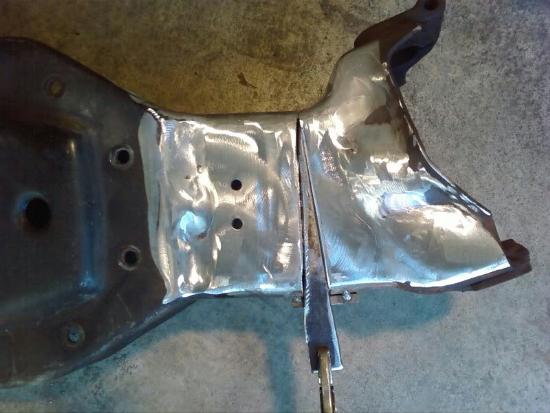
The gap is filled and then welded.
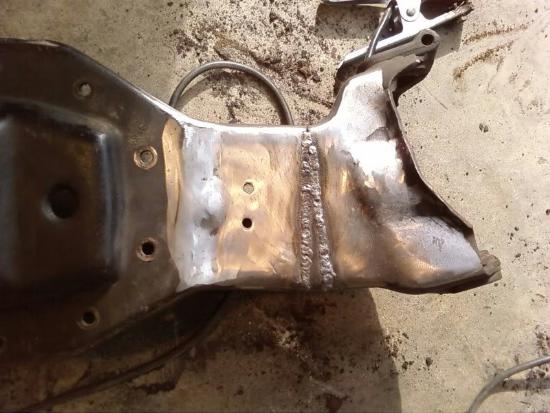
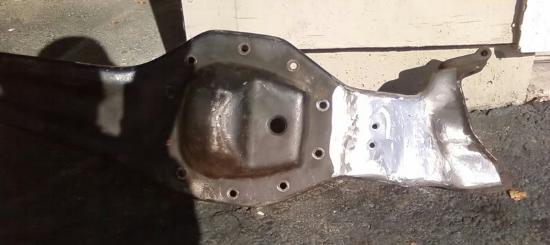
And and so footing smooth.
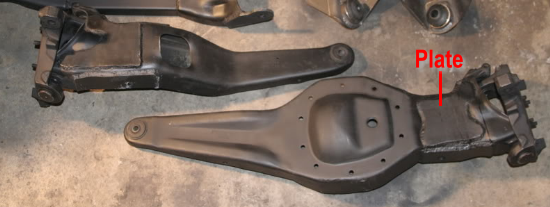
A metal plate is so welded over the cut and welded sections to strengthen them.
Using this method volition not cause any meaning reduction in your axle/track width.
Very important annotation: Cutting the beam and turning the unabridged knuckle up as described hither creates a misalignment of the driver side axle shaft with the wheel spindle (come across cartoon beneath):
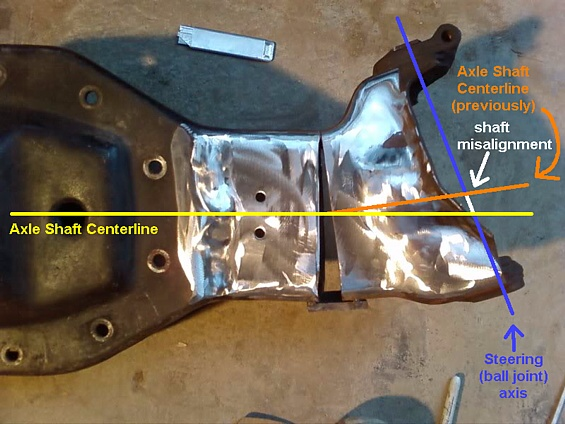
Two suggested means to fix this are:
1. Reposition ("clock") the differential on the beam slightly and so that the shaft is realigned with the spindle (a pretty big chore that requires reaming/redrilling all of the holes in the beam, along with modifying the pinch bolt back up area at the rear), or:
2. Actually separating the commuter-side knuckle from the beam, and moving it straight down approximately 1/4-1/2 inch and so that the previous axle centerline at the knuckle will be aligned with the existing axle centerline where information technology crosses at the steering axis (pieces of 1/four-inch plate fabric tin can be aligned next to the gaps in the beam (summit & bottom) that were created past moving the knuckle down and so welding them into place).
Be certain that you have checked for this issue before you fully weld up the beam (brand sure that the axle shaft tin be fully inserted into the diff and that information technology still rotates freely after you install the spindle).
Cutting The Pivot Finish of The Axle Beam:
An early on case of cut and turned beams were the ones done by Lee and Gloria Zimmermann on their 1993 Ford Explorer. This method involved creating a jig for cutting the pivot finish from the beam, moving the mounting hole (pivot) up to compensate for the elevator, and using material to fill in the gaps and strengthen it. This is probably the most hard mode to do a cut and plow, and is a method we practise not recommend as information technology offers only minimal benefits of a Cut and Turn while introducing most of it's drawbacks (see annotation nigh it'south disadvantages at the finish of this commodity). Near, if not all, reputable race shops utilize the brawl joint relocation method of modifying the beams.
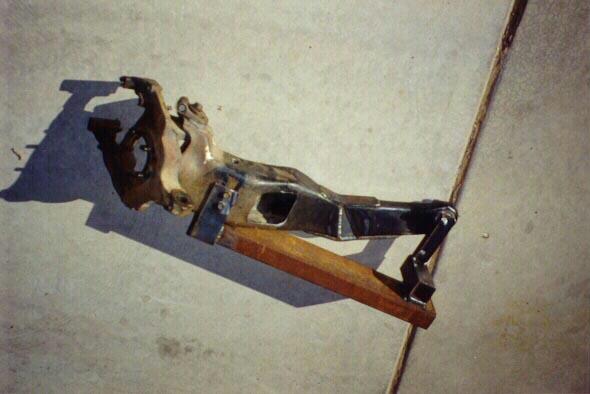
The Zimmerman'southward build tin be institute Here for anyone wishing to reference it. Information technology'due south non exactly direct forward because they still used an axle beam drop bracket, and modified coil spring bucket.
Cutting and turning the axle beam on the pivot end volition actually shorten the beam if steps aren't taken to account for this.
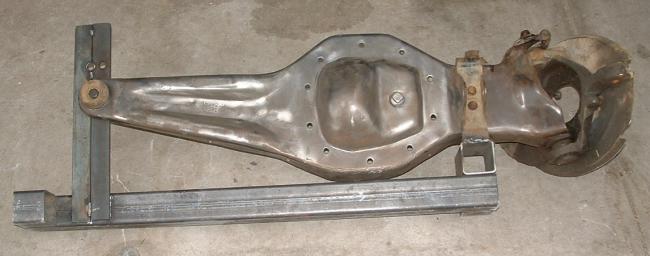
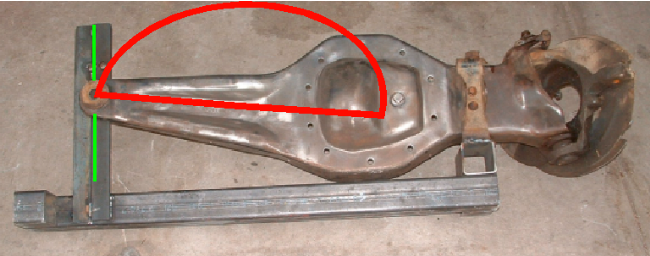
These (two) photos of the jig used by Bronco Two owner 410Fortune shows how the beam becomes besides short when the pivot is cut and repositioned for lift.
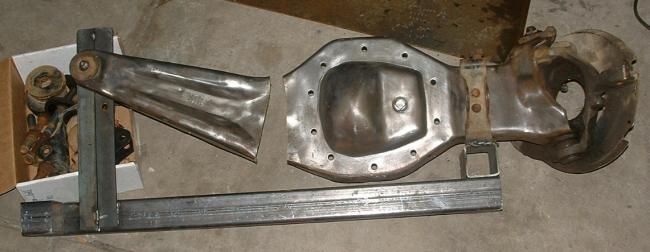
The drawing beneath gives you some thought of how the beam moves abroad from the mounting point if you plow the beam upward for lift. if you just cut the beam and bend it, it will be to curt. You lot actually have to cut it off and fill up in the missing material.
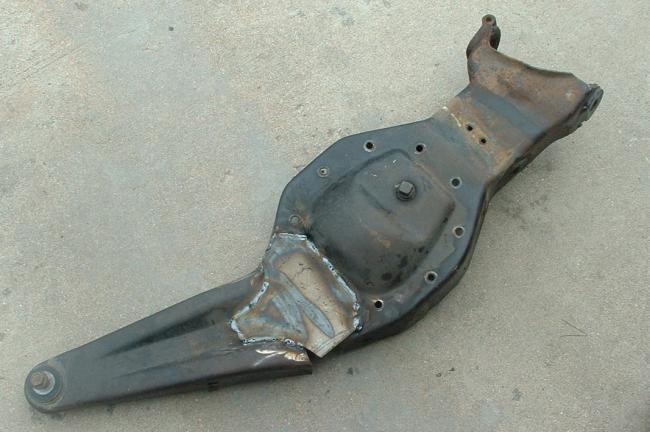
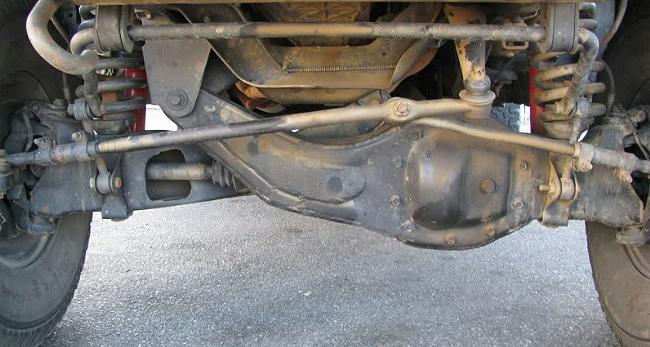
If washed using a jig like shown above, a pregnant reduction of your axle / track width can be avoided.
How Much Lift You lot Tin Cut For:
A Cut and Plough is best suited to no more 3-inches of increased lift height (5 inches if doing a Cut & Turn on a Dana 44 TTB). Users accept reported issues with taller amounts of lift ranging from as well much bending on the u-joints causing binding and/or bad vibrations while in 4WD, to issues with the RH axle slip spline overcompressing and/or overextending. Higher up iii inches of lift (5 inches on a D44), drib brackets should be used in conjunction with the cutting and turn so that the u-joint angles don't go too extreme.
During 1987 and 1988, the Ford Ranger 'High Rider' STX offered a unique suspension with 1.five inches more footing clearance. To reach this, Ford used different mounting brackets for the axle beams and radius artillery. These brackets can be used with a Cut and Plough to provide an additional ane.five" or and so to the finished break.
Beneath is a photo of the STX brackets on the left, compared to standard brackets on the right.
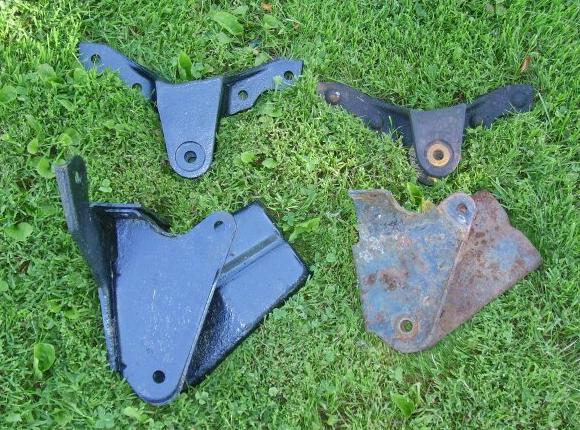
(1987-1988 Ford Ranger STX mounting brackets on the left - stock brackets on the right)
Clocking (Re-Indexing) The Differential (Cutting The Brawl Articulation & Cut Before The Knuckle Methods):
If you angle the beam too far trying to cistron in as well much elevator, y'all may have to re-index the differential on the beam. Otherwise, your driver side axle could bespeak down likewise far, and the passenger side, up also far. This effect can come upward with lifts of five-inches or more on the Dana 35 TTB. This tin be corrected past re-indexing (turning) the differential housing (requires diverse amounts of reaming, and/or redrilling of the holes in the beam), withal yous should avoid finding yourself in this position past keeping your elevator height increment to 3 inches or less.
Use of the 'Cutting Earlier the Knuckle' method alone may also require re-indexing the differential for proper axle shaft alignment.
What are the disadvantages of a Cut and Turn on a TTB suspension?
Cut and Turning of a TTB furnishings large changes in the suspension's geometry. While these changes give you meaning additional clearance under your axle, a side-effect from it is an increased jacking moment that is created by the axle's pivot points beingness college up nether the chassis relative to the axle. Another is an increased modify in the track-width as the interruption cycles up and down. These furnishings commonly don't create much problem driving at high speeds, however they do have a potential to crusade greater vehicle instability at slower speeds if the break unloads while on a steep off-camber colina or while rock crawling on a trail. For this reason, a Cut and Turn is a modification that is best suited to desert (prerunner) rigs that are built for college-speed use.
Resources:
Be sure to check out our:
Ford Ranger 4x4 Intermission Forum
Ford Ranger Prerunner Forum
Source: https://www.therangerstation.com/tech_library/dana_35_ttb_cut_and_turn.shtml
0 Response to "what did you use to cut ford ranger i beam?"
Post a Comment